A Safe Place To Start A New Journey.
 Authored by:Josh Hamburg
 Medically reviewed by:Dr. Mostafa Assadalla Sherazy





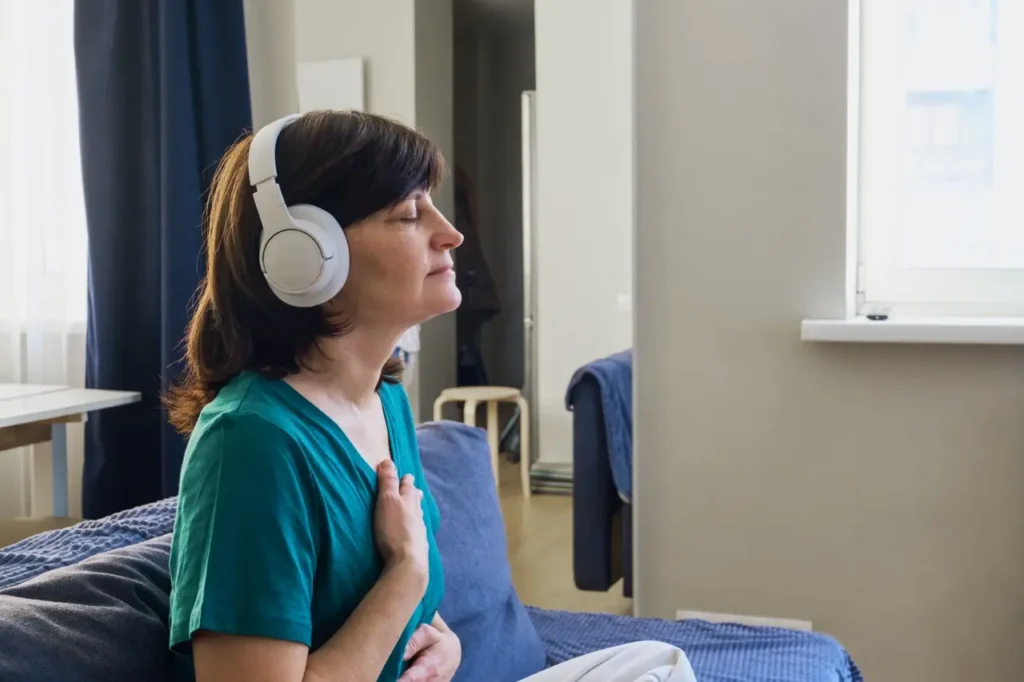
Music therapy for addiction is clinical treatment delivered by a trained music therapist, using rhythm, listening, lyric work and songwriting to reach material that talk therapy reaches slowly. At New Leaf Detox & Treatment in Laguna Niguel, recovery isn’t just about the end of something, it can also be the start of things you forgot you liked, or things you never really had space for in the first place. A different rhythm. A different way of being in your own life again.
It doesn’t always have to feel so heavy or serious. Sometimes recovery is quieter than that. More curious. Like slowly coming back into yourself and noticing what actually feels good, what feels calming, what feels like you. And for a lot of people, music ends up being part of that. Not in a complicated way. Just something familiar. Something that can shift how you feel without needing many words. It can bring stuff up, settle stuff down, or just give you a place to be for a minute without overthinking it. Music therapy uses that in a really simple way – not to fix everything, but to give you a different way to connect with yourself while you’re figuring things out.
When people hear the word substance abuse, they usually picture something extreme. But in real life, it often starts in quieter ways. It can build slowly, without a clear line where things suddenly “become a problem.”
For some people, it’s connected to trying to manage anxiety, depression, or ongoing stress. For others, it can be about getting through routines that feel overwhelming or emotionally flat. Over time, those coping patterns can start to feel automatic, even when they’re not really helping anymore.
This doesn’t always mean someone sees themselves as “addicted” right away. A lot of the time, it just feels like something has shifted, quietly, and they’re not sure how to get back to where they were before. That’s part of why music therapy services are sometimes used in recovery. Not because it replaces everything else, but because some of what happens in addiction isn’t easy to think or talk through directly at first. Music can give people another way in – a starting point that doesn’t rely only on words.
Music therapy isn’t about being good at music. You don’t need music theory, you don’t need talent, and you definitely don’t need to “perform” anything. It’s not formal or intimidating. It’s more like “let’s see what happens when we use music instead of forcing everything into words.” For people dealing with substance abuse, or just coming out of long stretches of stress, this can feel a lot less intense than traditional therapy. You’re not trying to “get it right.” You’re just working with what’s already there.
A music therapist, usually a board-certified music therapist, is there to help you use music in a way that feels grounding and real. Sometimes that looks like listening to music and just noticing what comes up. Other times it’s a little more active, like songwriting, simple improvisation, or working with basic rhythm using instruments, tapping, or even just movement.
It can also help with things like self-esteem, emotional regulation, and reconnecting with parts of yourself that kind of got buried over time. For some people managing ADHD or autism, it can feel more natural than sitting in a room trying to talk everything through. At the end of the day, it’s not really about music. It’s about giving yourself a different way when words aren’t doing the job.
Music therapy is a credentialed clinical profession, not a jam session with a few instruments in the room. Board certification (MT-BC) calls for a degree from an approved music therapy program, 1,200 hours of supervised clinical training and a national board exam, with recertification on a fixed cycle. Four methods do most of the work in addiction treatment.
Receptive listening through headphones runs alongside all four, most often for sleep and for the flat, low-energy stretch that follows withdrawal. Music therapy sits beside art therapy in the same creative-expression track, and both feed our wider holistic program alongside mindfulness meditation.
New Leaf Detox accepts all PPO plans, which can cover up to 100% of treatment costs. Contact our team today for a free, confidential verification of your benefits.
Music therapy shows up in many different places – recovery programs, community spaces, school districts, and places like OCCTAC (Orange County Children’s Therapeutic Arts Center) in Santa Ana. But it doesn’t always look formal or structured from the outside. For some people, it’s part of a bigger recovery process. For others, it’s just a place to land when things feel a little heavy or disconnected. It can be something steady to come back to when everything else feels like too much.
A music therapist might work one-on-one or in groups, depending on what feels right. Some music therapy sessions are quiet and simple. Others are more expressive. There’s no single way it’s “supposed” to look. It can also be helpful for people dealing with things like stress, ADHD, autism, mental health disorders, or long-term substance abuse, especially when talking things through hasn’t felt like enough on its own.
At its core, it’s not really about the location or the setup. It’s about having something available nearby in Orange County that gives people a different way to process what they’re going through – something a little more human and less forced.
Music therapy is an addition to addiction treatment, not a substitute for it. The evidence base is framed the same way, including the Cochrane Review of Music Therapy for people with substance use disorders indexed at the National Library of Medicine (PMC).
Here is where it lands in the sequence at New Leaf:
You do not book music therapy on its own. It is part of the residential program, and New Leaf Detox accepts all PPO plans, which can cover up to 100% of treatment costs. Our admissions team confirms your benefits before you arrive. Call (866) 932-0905.

If you’re weighing music therapy, treatment programs in general, or just starting to notice that something in your life feels off, heavy, or harder to manage than it used to be, you don’t have to figure it all out alone.
At New Leaf Detox and Treatment, support isn’t about judgment or labels. It’s about getting a clearer sense of what’s going on and what might actually help you move forward in a way that feels realistic for you.
Sometimes that starts with talking. Sometimes it’s just asking questions. Sometimes it’s simply having someone help you make sense of patterns that have been building over time.
There’s no pressure to have everything decided before you reach out. You don’t need the “right” words or a perfect script – just a willingness to start the conversation. Call (866) 932-0905 whenever you’re ready to talk it through.

Music therapy is a form of supportive care that uses music to help people work through emotions, reduce stress, and work through challenges in ways that talk alone cannot. A music therapist leads the process based on your needs.
No. You don’t need any background in music theory or performance. Most music therapy sessions are focused on taking part, not skill.
Sessions can look different for everyone. You might do listening to music, simple rhythm exercises, songwriting, or even light improvisation, depending on what feels helpful that day.
It can be used alongside support for things like anxiety, depression, and stress. It’s not about “fixing” anything, but about giving another way to process what you’re going through.
Yes. It’s sometimes included in treatment for substance abuse as part of a broader support plan. It can help people reconnect with emotions, routines, and self-expression during recovery.
| Authored by: Josh Hamburg Meet Josh Hamburg: Supporting Recovery at New Leaf Detox Josh graduated from University of California, San Diego Extension in 2015 with a Certificate in Alcohol and Drug Abuse Counseling. He graduated from Saddleback College in 2016 with an Associates of Arts in Psychology. He received a Bachelors of Arts in Psychology at California State University, Fullerton in 2020. |